Ahmet Çullu online lecture: ‘The Life of Hüseyin Kavalali’, 25 January 2022 - flyer: - slides - list of references of images in presentation:
1- When did you first seriously started investigating your family’s history and what was the biggest obstacles you faced?
You might consider that I started the investigation about my grandfather’s life after I visited Kavala in August 2017. But it really took off after I was handed a CV prepared by the ISBANK by its CEO and CoB Ersin Özince which led me to the ITO (Istanbul Chamber of Commerce) and the conference at the Sabancı Museum where I met Mrs Anna Missirian who opened the doors in Kavala.
The biggest obstacle or rather the handicap was lack of information passed on to me by the family, I had to dig out a lot of information as he was a multi-facetted personality.
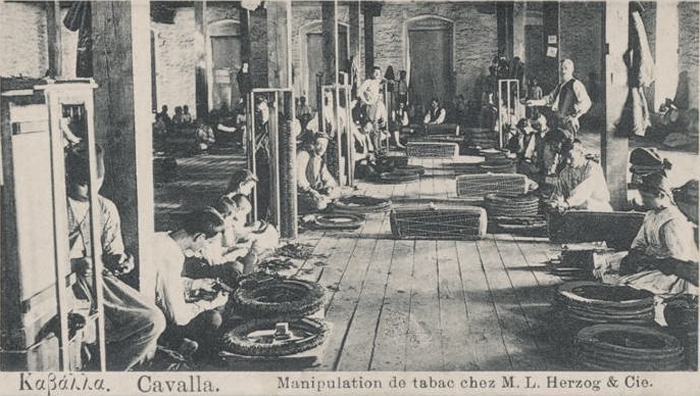
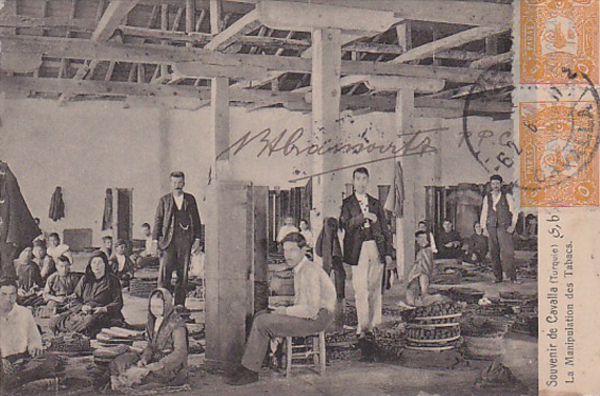
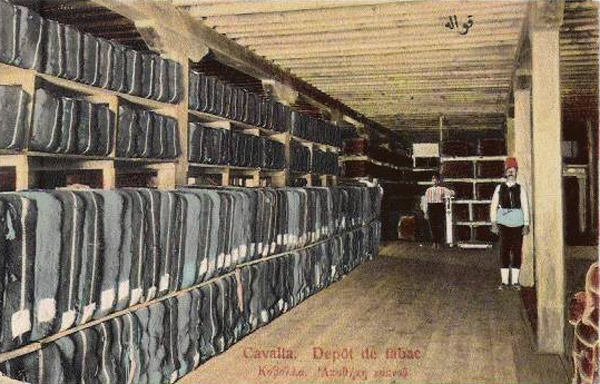
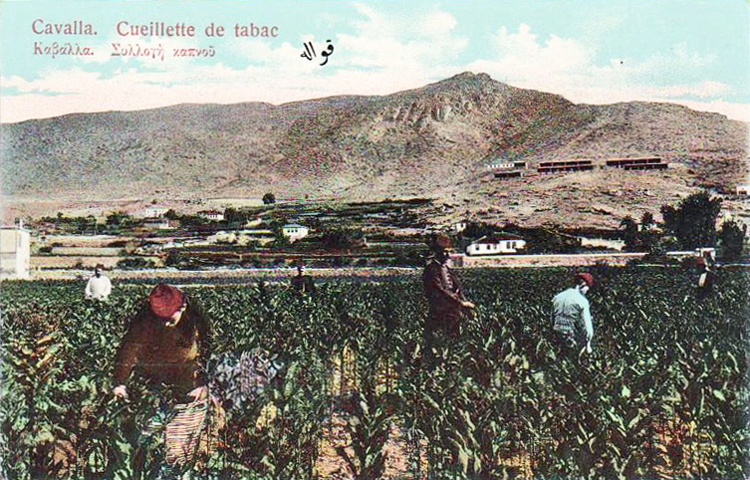
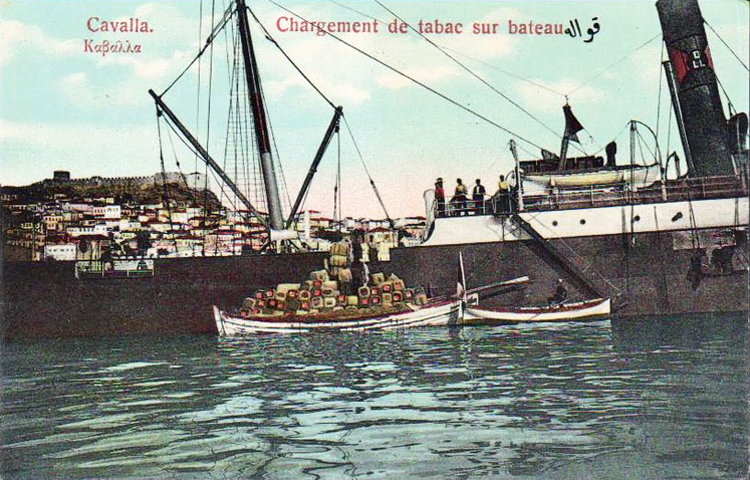
2- Was Kavalla’s importance in late Ottoman times built over-whelming through the tobacco processing / export as there was no shortage of tobacco warehouses as we can see in old photos?
Indeed Kavala’s importance starting from the late 18th century was over-whelming, it was a champion in tobacco growing, processing and exports. Tobacco was the most important export item of the Ottoman Empire besides dried figs.
3- In the first Ottoman census of 1831 the male (over 15 only) population of Kavalla was listed as 1514 Muslim and 102 Greek Orthodox, so around 85% Turkish speaking Muslims presumably which also presumably was roughly the proportions up to 1912. So can we assume the tobacco growing, processing and export business was over-whelming manned and controlled by this population to which your grandfather belonged?
Not exactly. First the population grew as the tobacco growing and processing expanded and Greeks, Bulgarians came in to work in the fields and in the processing of tobacco and you have Muslims emigrating due to the pressures especially from the Bulgarians after the 1877-78 Russian War. Hence the population mix changed over time.
On the business side it was mainly controlled by foreign companies, Regie and a few local Turks, Greeks and Jews. My grandfather’s family belonged to the latter group.
4- In 1909 the Kavalla Welfare Association Workers of Tobacco workers became a recognised authority in 1909 entrusted to protect workers rights in that sector and your grandfather Huseyin Kavalali was elected the honorary president of the Union. Does this suggest your grandfather was a humanist who believed in economic liberalism yet had what we can describe as socialist views?
Yes. He was active in the formation of CHP which is a social democratic party and stayed with the party all along, not like some who switched to become conservatives and use religion to gain power...D.P. He was a religious person, but never abused it for his benefit.
He believed in economic liberalism, private sector and foreign investment. He did not want the state to interfere in commerce though supporting heavy investments by the state as the Turkish business people did not have the capital and expertise to make the necessary investments at the time. But he wanted the state to withdraw from business activities and leave it to the private sector in due time.
From the past experience with the Ottomans; he was afraid that the state could empower certain local or foreign personalities/companies to turn it into monopolies.
He was a humanist, he was respected and loved by people around him.
5- Was the Ottoman tobacco Regie ‘heavy handed’ when dealing with the various tobacco traders and thus the various congresses organised by Kavalla and Drama traders was to push-back against damaging policy of the central government which gave a pretty free reign to the Regie which was entrusted to collect heavy taxes to pay of the huge national debt?
Regie had certain obligations to fulfill such as providing for the transportation and storage of tobacco; and to do that they had to build roads and warehouses which they did not do. They had the power to issue permits for growing tobacco and setting the price. These were the main topics discussed at the congresses.
However, the Regie was despised by the people due to their harsh treatment of smugglers by the Regie police force. (It is said that they were much more cruel than the regular police and have killed a lot of farmers smuggling tobacco).
What I gather is that smuggling was caused by the economic pressures on growers who were not permitted to grow tobacco or did not get a fair price for their produce, thus they were smuggling to survive.
6- In 1912 your grandfather and family left the chaotic conditions in Kavala with the first Balkan War on board the Egyptian super-yacht El Mahrousa, so does this suggest your grandfather was friends before with Khedive Abbas Hilmi II?
I don’t have any solid evidence to say that. But due to the fact that Kavalalı Mehmet Ali Paşa family who were reigning in Egypt, there have always been a close connection between Egypt and Kavala. So, there is a possibility that there was a relation between the two. Later they established a bank together in 1927 while Abbas Hilmi II was in exile in Geneva and my grandfather was on the board of the bank.
7- Your grandfather stayed in Istanbul through the 4 years Allied occupation and assisted in the MIM MIM organisation to assist the nationalist forces fighting in Anatolia and post liberation was instrumental in the formation of the MTTB (National Turkish Commerce Union) and was elected the first president of the union. He organised the UNION to submit a 12 point proposal for the first Izmir economic congress to be held in that city in February / March 1923. These include no monopoly granted to foreign capital. Do you think his negative experience of dealing with the Regie had a major bearing on this condition? Another clause in these proposals concerns the establishment a national bank which should be a joint stock company whose capital is sold partly to the state and partly to the public, and even if the state invests in this bank should later sell its shares and disengage from the bank. This sounds like a very modern vision of liberal economics, and do you know to what extent this seemingly sensible policy was then pursued?
On the monopoly issue probably his experience with the Regie played an important role for his stance against monopoly, he believed that business should be left to the private sector and only controlled and taxed by the state. As he said “the state does not have the commerce logic, thus should not engage in commerce”.
The investors in the first national bank, T. İş Bank were all business people and Ataturk, who left his shares to CHP as a custodian but the dividends to be paid to TDK (Turkish Language Society) and TTK (Turkish History Society). Thus there has never been a state involvement in the Bank.
8- Your grandfather campaigned hard for Balkan refugees to be given comparable real estate directly to compensate for what they lost as opposed to the state gaining all abandoned Greek properties automatically and then dispensing according to its discretion. Do you think this was a great injustice to the refugees on both sides of the Aegean?
Yes, this is my opinion. As I can see from my family, they did not get a proper compensation against what they owned in Kavala as real estate, which was substantial; and what they left behind were not given to the Greeks who settled there. They were given to the military, Ministries and National Bank of Greece to be sold. Whereas, there were prominent and very rich Greeks who ended up in Kavala after the exchange who would deserve to own the property left there by my family.
9- Did the Kavalla region regain its importance in tobacco exporting when it joined the Greek state?
Yes it did. It continued to be a major center for growing, processing and exporting tobacco as well as producing their own cigarettes once Regie was gone with the Ottomans.
10- How near are you in terms of completing your research and preparation for your intended book publication on your grandfather’s life and times?
First I am in the process of finishing my research regarding his work and campaigning for the Population Exchange issue. His logbook and notes during his duty as the head of the Turkish Exchange Delegation in Kavala have already been translated into Latin alphabet and today’s Turkish but needs to be edited. That I estimate to be finished within 2-3 months to be delivered for printing.
As for the biography I have to stop my research and start assembling the data I have at hand. It has been a tedious process and every day a new document and information comes up! For instance in my speech I told you that I did not know of his involvement in the CUP movement. Yesterday the researcher from the Ottoman Archives, who helps me on this project, sent me a document stating that he was elected to the board of directors of the CUP several times from 1908 till his departure in 1912. He also served as the Mayor of Kavala for two months in 1912 and probably cut short due to the occupation. So he was deeply committed to the CUP movement.
11- Did your family adapt well to their new home in Bornova, Izmir?
Although the tobacco trading company had their head office in Istanbul they also had an office and processing warehouses in İzmir, as it is one the main tobacco growing districts. Thus my grandfather probably used to go to İzmir a lot and had the network of tobacco people there. He went there with his wife and only my mother who was his youngest daughter, the other two daughters being married and were living in Istanbul and Ankara. My mother met my father through their Levantine friends in Bornova and got married in 1942. I believe that they were well blended in with the Bornova society as my mother used to recount the lavish parties they used to have before moving to Istanbul in 1947 when my father moved his law office to Istanbul.
Thus I was born in Bornova but had to come to Istanbul when I was 6 months old and have been living in Istanbul since. I enjoyed Bornova during my stays there on and off till I was 12 years old and enjoyed being there with my grandfather.
Questions by Craig Encer, February 2022
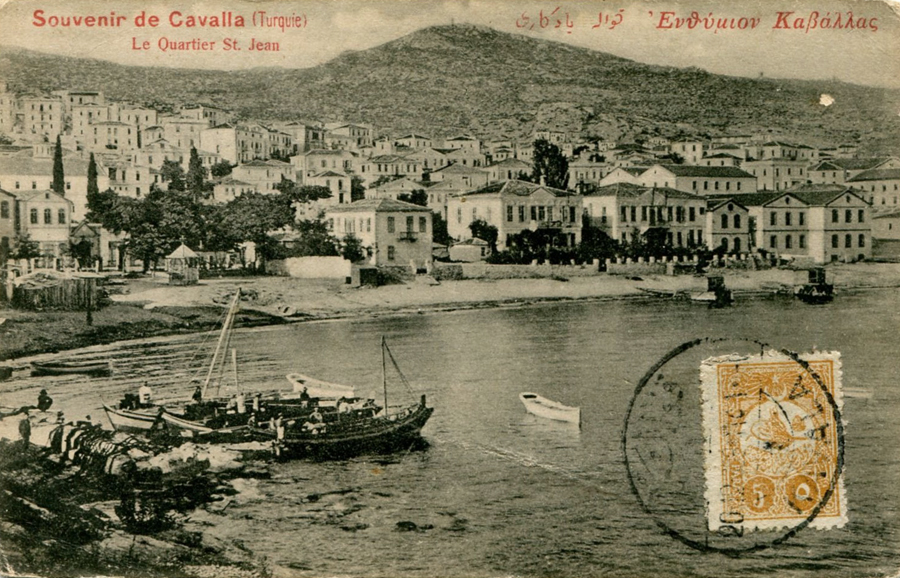
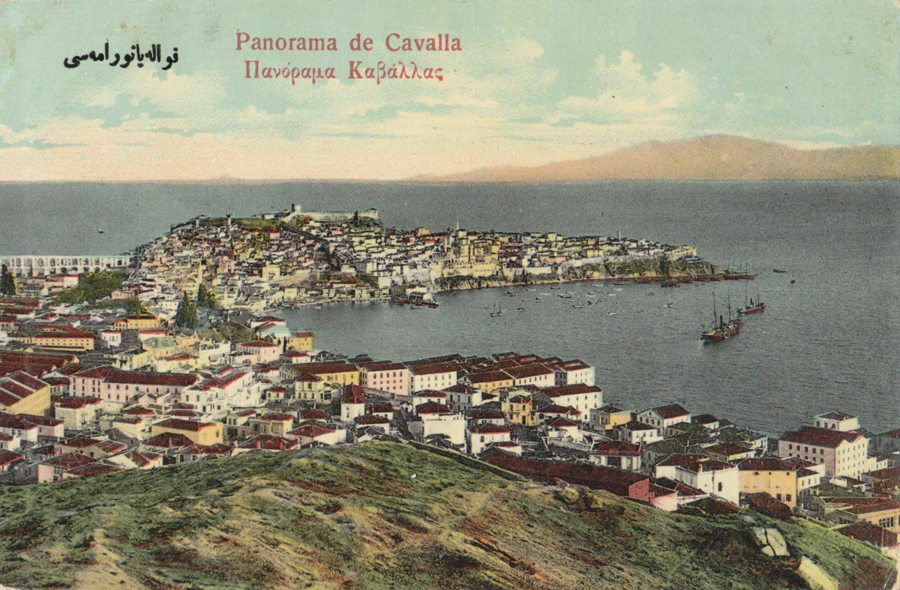
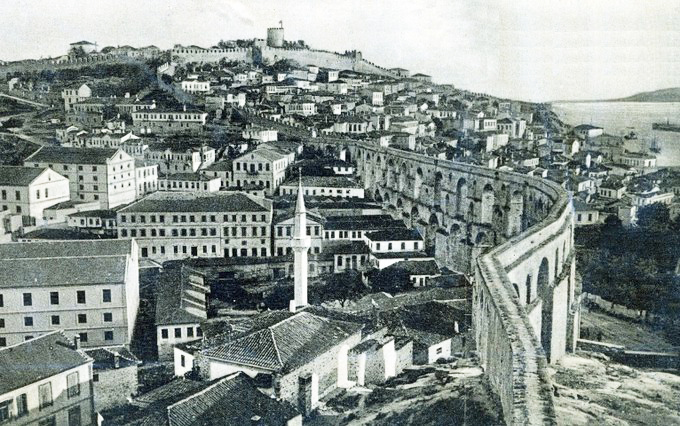
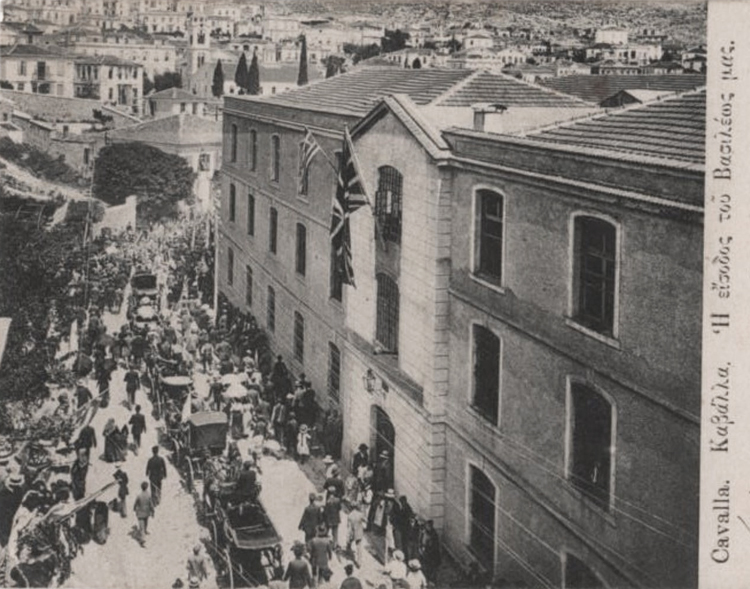
Range of postcard views of Cavalla in Ottoman times.
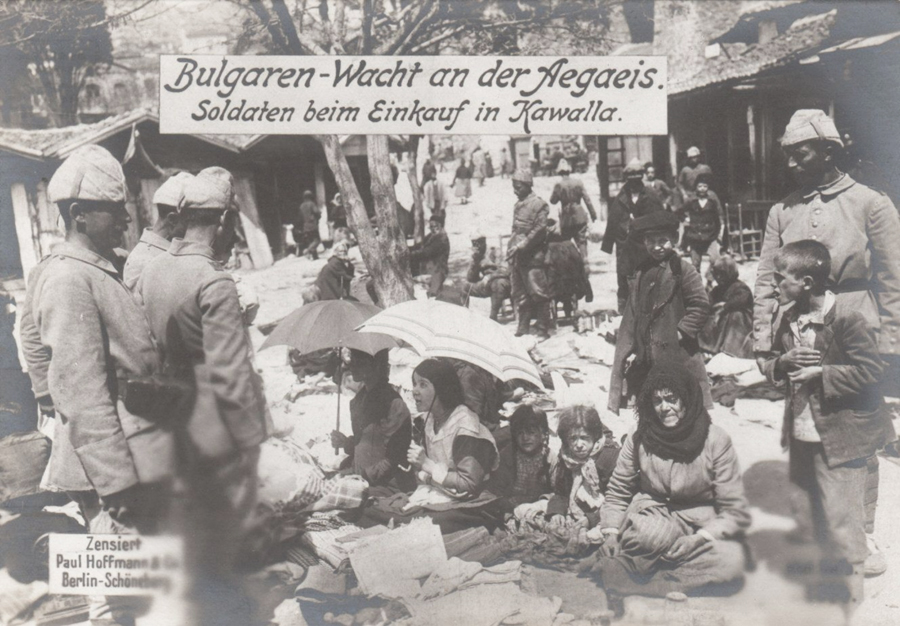
Bulgarian soldiers in Kavalla during the first Balkan War (1912-13).
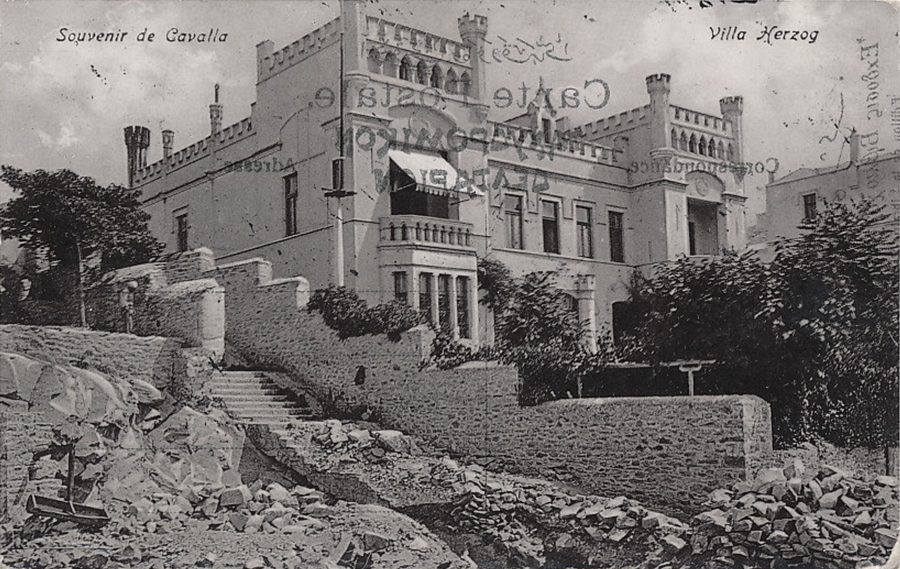
Residence of German Jewish Baron Pierre Herzog who in 1905 became the main supplier of tobacco to the Sultan, as an Austro-Hungarian Company, built as an imitation mini Hungarian castle. Today the building still serves as the town hall of Kavalla.