David Gill online lecture: ‘Winifred Lamb and Anatolia: Excavations, Intelligence and the BBC’, 16 December 2021 - flyer:
1- When did you become interested in Winifred Lamb and her work and was her being a woman in a mostly man's world at the time one of the attractions of studying her work and legacy? How long did it take to research for the book?
Winifred Lamb was honorary keeper at the Fitzwilliam Museum, Cambridge for nearly forty years, and was recognised as one of the major donors to the classical collection. I was responsible for the Greek and Roman collection at the Fitzwilliam in the early part of my career and it was impossible to ignore her contribution to the museum as well as the department. My first piece of research on Winifred was with my then colleague Kevin Butcher (now at the University of Warwick) when we made a study of the ‘Fitzwilliam Goddess’ that was purchased in 1926 to enhance the newly created Prehistoric Gallery; its purchase had been strongly recommended by Sir Arthur Evans. The figure was acquired as a Minoan sculpture and celebrated in a Cambridge University Press monograph by Alan J.B. Wace as well as on the frontispiece for the first volume of the Cambridge Ancient History. However, the statue turned out to have been a modern creation, probably made by one of the restorers at Knossos.
I was then invited to contribute an essay on Winifred to an edited volume, Breaking Ground: Pioneering Women Archaeologists, edited by Getzel M. Cohen and Martha Sharp Joukoswky (University of Michigan Press, 2004). I subsequently published a series of studies on her: her first year at the British School at Athens, and her travels in north-western Greece and in Anatolia. The breakthrough came when Winifred’s relations ‘discovered’ a batch of her diaries and unpublished papers in a trunk in the basement of the family house. This presented new opportunities to write about her remarkable life. The work on Winifred encouraged me to write a study of pioneering British women at Athens before the First World War.
2- It seems Winifred Lamb had an independent streak from early years and one of her lecturers at Newham College banned her from his lectures as she supported the anti-military pressure group The Union of Democratic Control. Can we see this streak of being somewhat anti-establishment right through her later career?
Winifred was influenced by her father, Edmund, the Liberal MP for North Herefordshire. Her maternal grandparents, the Winkworths, were early benefactors of Newnham College, Cambridge, and active supporters of education for women in Manchester. The years following the First World War provided the opportunity for women to hold jobs that had previously been offered to men. (Sir) Sydney Cockerell, the director of the Fitzwilliam, was himself marginalised by Cambridge society, and there was an affinity with women who in the 1920s could not take a full part in the life of the university. I do not think Winifred could be seen as anti-establishment: she supported the work of the Fitzwilliam as well as the British School at Athens, and played an active role in both world wars.
3- In the 1920s Winifred Lamb was more of a collector of antiquities rather than an archaeologist, attending sales of antiquities, publishing an article in the Journal of Hellenic Studies on a collection of vases she purchased in one sale. So could we argue her entry into the field of archaeological study was through that hobby / passion?
Classical archaeology at Cambridge was, at the beginning of the twentieth century, very much book based and Winifred was influenced by A.B. Cook, author of the monumental work, Zeus. But in the spring of 1920 she took herself to visit the newly opened British excavations at Mycenae, and in the autumn of that same year enrolled as a student of the British School at Athens. That was the start of her archaeological career that saw her excavate at Mycenae, Sparta, in Macedonia, at Methmyna, Antissa and Thermi on Lesbos, at Kato Phana on Chios, and then at Kusura in Turkey. We know that she had read the Cambridge handbook to archaeological excavation written by John P. Droop (1915); Winifred and the other women at the School mocked his hostile attitude towards the involvement of women on digs that had been derived from his experiences of a Newnham student on Melos. The outbreak of the Second World War brought Winifred’s active fieldwork to a close.
Winifred followed a parallel career as a museum curator writing about Greek and Roman bronzes, and preparing two Cambridge fascicules of the Corpus Vasorum Antiquorum (1930, 1936). The Fitzwilliam’s collection was expanded by Winifred’s acquisitions made at sales, in galleries, and from private individuals.
4- Lamb began working at the Department of Greek and Roman Antiquities in the Fitzwilliam Museum in Cambridge from 1918 and retired from the role of Honorary Keeper in August 1958, becoming one of the museum’s greatest benefactors of Greek and Roman antiquities. Clearly she was very good at her job and seems to have also committed her own money in building up the collections. Does her analysis of the artefacts still stand the test of time?
The two Cambridge fascicules of the Corpus Vasorum Antiquorum remain the definitive publication of the figure-decorated and black-glossed pottery in the Fitzwilliam. While some of the approaches are dated, her descriptions were precise. It is striking that while she was preparing the volumes she was actively reviewing fascicules for other collections (mostly for the Journal of Hellenic Studies) and commenting on design, photography and emphasis. She was a friend of the Oxford academic Sir John Beazley (since her work in naval intelligence) and his influence on her is quite recognisable in her published work.
5- Winifred Lamb was a keen photographer and those covering Anatolia were retained by the late archaeologist Rachel Hyslop who worked in the digs with Lamb at Kusura, Turkey. Have you been able to see this collection and do you know / think it will have intrinsic value to be placed in a publicly accessible institution?
Winifred was a keen photographer: she commented on the quality of images in reviews, and she gave her camera equipment to the Institute of Archaeology in London. There are numerous albums of photographs that give insights into Greece and Turkey during the inter-war period. The series covering Greece is largely housed at the British School at Athens. The photographs from Winifred’s travels in Greece and during the Kusura excavations are in an album that was given to Rachel Maxwell-Hyslop. Rachel kindly let me borrow the album and some of the images were used to illustrate my article in Anatolian Studies.
6- Was the excavation at Thermi on the island of Mytilene Winifred Lamb's first true own controlled excavation (1929-33) and do you think she was able to show her earlier built up experience as clearly this site provided many finds from pre-history of the region which presumably was still poorly understood at the time?
Winifred was assistant director of the excavations at Mycenae under Alan Wace (and Carl Blegen of the American School of Classical Studies at Athens). She was in charge of specific parts of the excavation, such as the palace complex. She had been due to be a deputy director of the Sparta excavations under Arthur M. Woodward, but her family situation meant that she stepped back from that role. Winifred was keen to develop her own excavation following Sparta, and this is reflected in her extended search for the right site: she eventually chose the island of Lesbos and identified the site of Thermi. The prehistory of the Balkans, the Aegean and Anatolia was a developing subject at this time. Winifred was influenced by V. Gordon Childe who encouraged her to think of the links between Macedonia and western Anatolia: during her work at Thermi, Winifred revisited Schliemann’s finds from the Troad that were held in Berlin. Her work on the prehistory of the Aegean picked up where Wace had to stop at the end of the Mycenae excavations: the British School at Athens made a conscious decision to work on historical sites such as Sparta and then the sanctuary at Perachora (under Humfry Payne). This privately funded archaeological work by Winifred shed new light on the north-east Aegean and the Troad. It should also be remembered that Winifred felt a responsibility towards the refugees on Lesbos and she employed them to assist with the excavations.
7- One of the projects that Winifred Lamb supported was the Halkevi London established in February 1942. Was this a project backed by Turkey itself, a sort of foreign branch of its namesake village schools across Anatolia at the time or a joint project with Turcophiles in England who wished to learn Turkish culture and language? Did this venture peter out in 1951 when the new Turkish government closed all these schools?
The opening of the Halkevi London was part of a concerted way that Britain was encouraging Turkey to remain neutral during the Second World War. It is clear from the BBC Archives that the Turkish language section of the BBC was a key force in its creation. John Masefield, the poet laureate, prepared a message for the opening with a hope that it ‘may make it easy for our two people to meet, share thoughts and cultures, and discuss, and encourage each other over the problems after the war’. In April 1942, for example, young people in London were invited to visit the Halkevi to watch films showing Turkish life; the Turkish Ambassador was closely involved with the event. Incidentally, another key figure in the creation of Halkevi London was Harold Bowen of the Ministry of Information; he was later involved with the foundation of the British Institute of Archaeology at Ankara. In 1946 the Halkevi London moved to 43 Belgrave Square. Some of the records for Halkevi London are held in the National Archives at Kew and end in 1953.
8- In September 1946 John Garstang who had worked on the Hittites in Turkey brought together a group of people with the aim of forming a British Institute of Archaeology in Ankara and Winifred was appointed honorary secretary in 1948 until she stepped down in 1956 shortly after Garstang died. Do you think she had an important role in helping to shape the mission and style of work of the Institute that still survives till today?
Winifred had experience of excavating in Turkey during the 1930s; the American archaeologist Hetty Goldman had been excavating at Tarsus at the same time. Winifred had experience of serving on the Managing Committee of the British School at Athens, and brought that committee and organisational knowledge to the Institute. Her book reviews that were prepared at this time shows that she was particularly connected with Turkish and German scholars, and this network was used to inform the life of the Institute. Her visits to eastern Turkey suggest that she was hoping to explore the extended lines of cultural influence that had started with her contribution to excavations on prehistoric mounds in Macedonia.
9- Is there more research that can be done on the life and work of Winifred Lamb?
I am grateful to Winifred’s wider family who granted me access to her diaries and unpublished lectures. Among her papers was a series of short stories including ‘The Inspector Interferes’ based on Winifred’s work at Kusura; Winifred had grown up with John Buchan’s stories and there is a clear influence from Agatha Christie. Winifred’s photographic albums shed light on her travels in Greece and Turkey and deserve to be better known. Her contributions need to be assessed against the work of other British archaeologists especially during the inter-war period. Winifred’s friendship with Dorothy Garrod, the first woman to hold the Disney Chair of Archaeology at Cambridge, would also be worth exploring.
10- What are you working on right now?
My biography of John Disney, founder of the Disney Chair of Archaeology at Cambridge, was published in 2020. The history of Cambridge classical archaeologists can be traced through my study of the British School at Athens (and its extensive work in Anatolia) up to the end of the First World War (Sifting the Soil of Greece [2011]) and then through Winifred Lamb’s biography (2018). I am currently working on an interdisciplinary study of the temple of Athena Nike at the western approach to the Athenian acropolis.
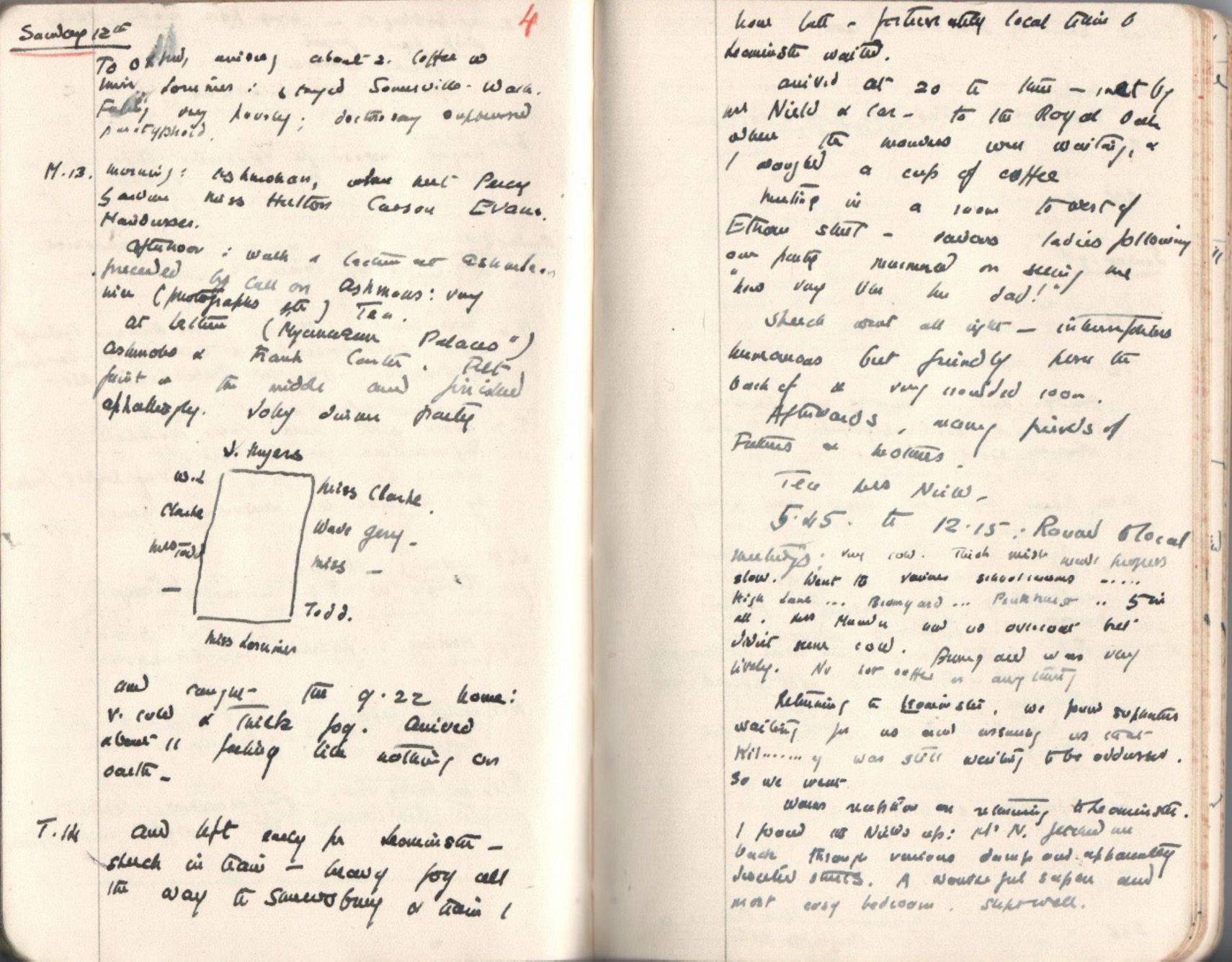
Extract from Winifred’s diaries

Winifred and Rachel Maxwell-Hyslop during the Kusura excavations
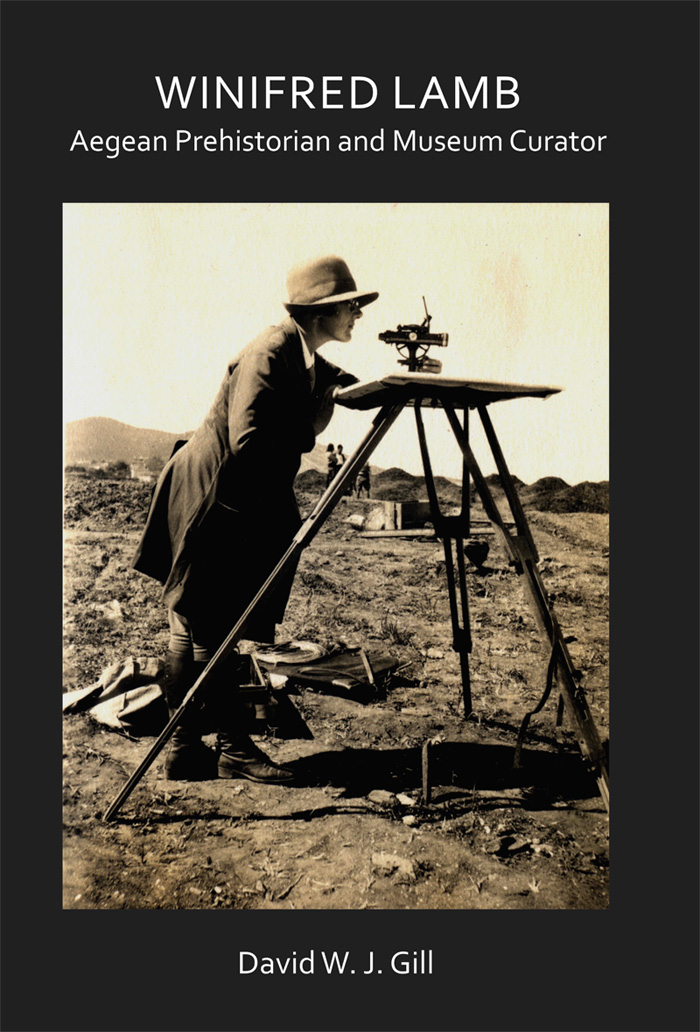
Book cover
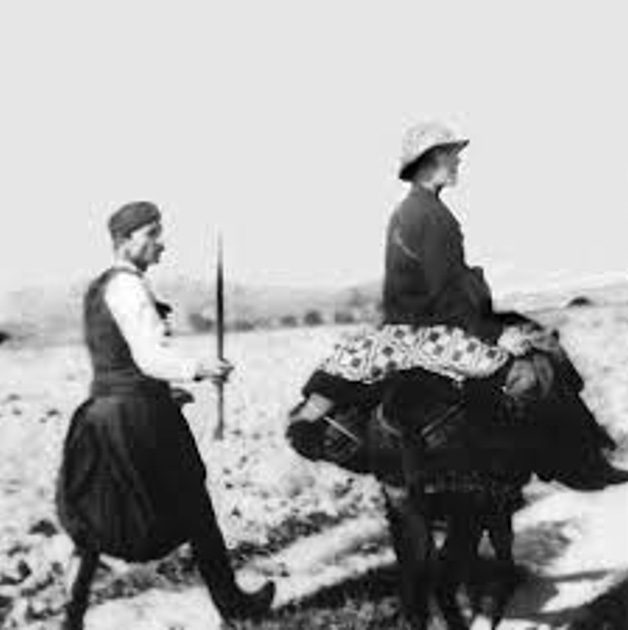
Winifred on Crete in 1921 taken by May Herford
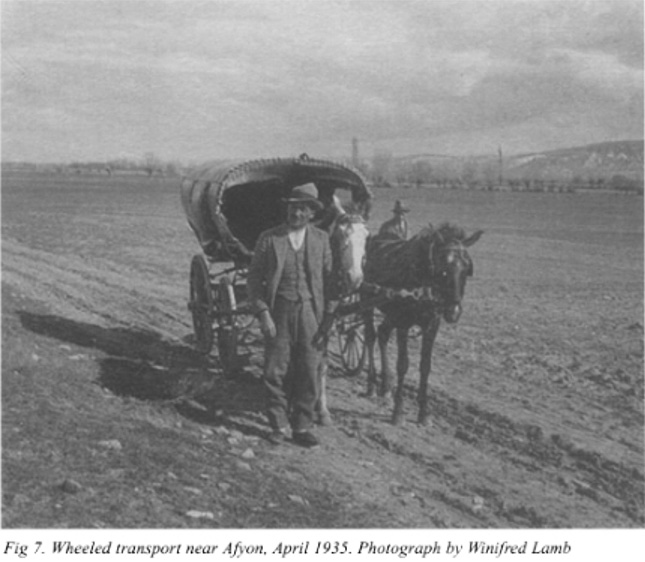
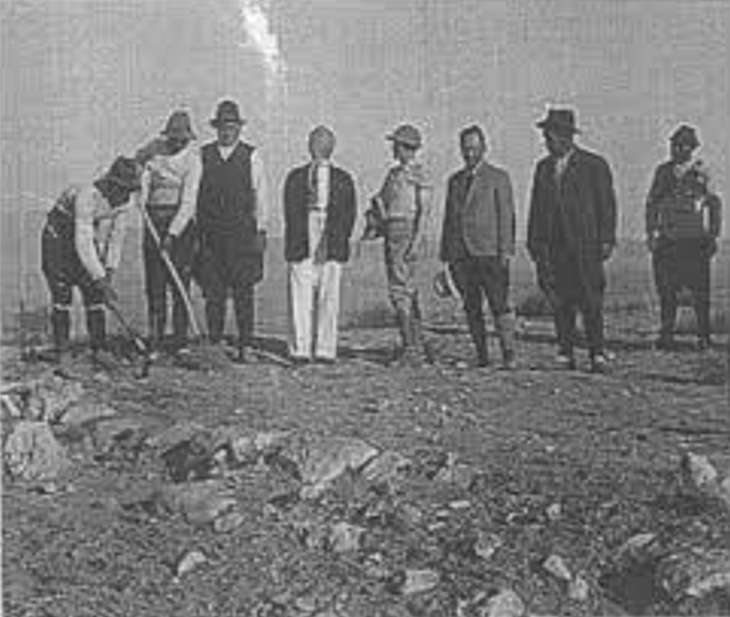
Winifred during the Kusura excavations
Publications on Winifred Lamb
‘Cryptography and vasology: J.D. Beazley and Winifred Lamb in Room 40’, in N. Sekunda (ed.), Wonders Lost and Found: a Celebration of the Archaeological Work of Professor Michael Vickers (Akanthina: Gdansk: Institute of Archaeology, 2020), 194–98.
Winifred Lamb: Aegean Archaeologist and Museum Curator (Oxford: Archaeopress, 2018), 284 pp. [ISBN 9781784918798]
‘From the Cam to the Cephissus: the Fitzwilliam Museum and students of the British School at Athens’, Journal of the History of Collections 24 (2012) 1–10.
Sifting the Soil of Greece: The Early Years of the British School at Athens (1886–1919) (Bulletin of the Institute of Classics Studies, Supplement 111; London: Institute of Classical Studies, 2011), xiv + 474 pp. [ISBN 978-1-905670-32-1].
‘Excavating under gunfire: archaeologists in the Aegean during the First World War’, Public Archaeology 10, 4 (2011) 187–99.
‘Winifred Lamb’, in Paul G. Bahn (ed.), The Great Archaeologists (London: Southwater, 2008). [ISBN 978-1-84476-562-1]
‘Winifred Lamb’, in Paul G. Bahn (ed.), The Illustrated World Encylopedia of Archaeology (London: Lorenz Books, 2007), p. 54.
‘Winifred Lamb: her first year as a student at the British School at Athens’, in S. Hamilton, R. D. Whitehouse, and K. I. Wright (eds.), Archaeology and Women: Ancient and Modern Issues (Walnut Creek (CA): Left Coast Press, 2007), 55–75.
(with T. Brothers and B. Stones) Travellers to Greece. (London: Classical Association, 2006). Including: ‘Winifred Lamb: searching for prehistory in Greece’, 33–53.
‘Winifred Lamb (1894–1963)’, in Getzel M. Cohen and Martha Sharp Joukowsky (eds.), Breaking Ground: Pioneering Women Archaeologists (Ann Arbor: University of Michigan Press, 2004), 425–81.
‘Lamb, Winifred (1894-1963)’, in Oxford Dictionary of National Biography, vol. 32: 285-87. Oxford: Oxford University Press, 2004), vol. 32: 285–87.
‘Lamb, Winifred (1894–1963)’, in The Dictionary of British Classicists (Bristol: Thoemmes Press, 2004), vol. 2: 556–57.
‘”A rich and promising site”: Winifred Lamb (1894–1963), Kusura and Anatolian archaeology’, Anatolian Studies 50 (2000), 1–10.
‘Winifred Lamb and the Fitzwilliam Museum’, in C.A. Stray (ed.), Classics in 19th and 20th Century Cambridge: Curriculum, Culture and Community (Cambridge: Proceedings of the Cambridge Philological Society suppl. 24, 1999), 135–56.
Classical archaeology sections for P. Bahn (ed.), The Cambridge Illustrated History of Archaeology (Cambridge: Cambridge University Press, 1996), esp. p. 356–57 (‘Women’s work’). [ISBN 0-521-45498-0]
(with Kevin Butcher) ‘The Director, the Dealer, the Goddess and her Champions: the acquisition of the Fitzwilliam Goddess’, American Journal of Archaeology 97 (1993), 383–401.